


The information in this article is for general informational purposes only and may become outdated; please ask a Corpwise consultant to provide the latest details.
For DSO-specific pricing and packages, visit our official DSO service page.
What DSO Costs in 2026
DSO sits in the middle tier of Dubai free zones — cheaper than DMCC or DIFC, more expensive than SHAMS or Ajman, and roughly comparable to IFZA.
- Service licence (2 visas): From AED 12,000. This is the entry-level package and includes a service licence with allocation for two residence visas. It doesn't include the flexi-desk or office space, which is a separate cost.
- Flexi-desk packages: From approximately AED 28,000 annually. This gives you a shared workspace and the physical address required for your licence. The flexi-desk cost at DSO is higher than at budget zones because you're paying for Dubai-based, premium-grade facilities.
- Dedicated office space: Starts around AED 35,000 to AED 55,000 annually depending on size and building. DSO has LEED-certified Grade A office buildings, which are a step above the typical free zone office. If you need a physical office where you meet clients or house a small team, DSO's office stock is genuinely good.
- Visa processing: AED 3,500 to AED 5,500 per visa. Covers entry permit or status change, medical testing, Emirates ID, and visa stamping.
Realistic first-year total for a small tech company (licence + flexi-desk + 2 visas): AED 35,000 to AED 45,000.
Realistic first-year total for a larger operation (licence + dedicated office + 5 visas): AED 60,000 to AED 85,000.
These numbers are higher than SHAMS (AED 18,000–24,000 first year) or Ajman (AED 14,000–18,000). But you're getting a Dubai address, superior infrastructure, and access to an ecosystem that budget zones simply don't have.
DSO Licence Types and Activities
DSO issues licences across multiple categories:
Technology licence: Software development, IT services, SaaS, app development, systems integration, cybersecurity, data analytics, and related tech activities. This is DSO's core.
Service licence: Consulting, marketing, management, education, training, design, and professional services. The most common licence type for non-tech businesses at DSO.
Trading licence: Import, export, and distribution of goods. DSO allows general trading, though it's not the most natural fit — zones like DMCC or Ajman are better suited for high-volume trading operations.
Industrial licence: Manufacturing, assembly, testing, and R&D. DSO has dedicated industrial and lab space for companies that need it. This is a genuine differentiator — most Dubai free zones don't offer manufacturing-grade facilities.
E-commerce licence: Online retail and digital commerce. Functional, but if e-commerce is your sole activity and cost is the priority, SHAMS or Ajman would serve you better at a lower price.
A helpful feature is that DSO allows you to combine professional and commercial activities under a single licence. In some free zones, mixing service and trading activities requires two separate licences or a higher-tier package. At DSO, a single licence can cover both, which simplifies the structure and reduces cost for businesses that do both.
The Setup Process
DSO's setup process is slightly more involved than the fully-digital budget zones, but it's still straightforward.
Step 1: Activity selection and application. Choose your business activity from DSO's list and submit the initial application. DSO's activities are categorised by the DSOA (Dubai Silicon Oasis Authority) under the wider DIEZ (Dubai Integrated Economic Zones Authority) framework, which also governs Dubai CommerCity and Dubai Design District.
Step 2: Trade name reservation. Standard Dubai naming rules. Expect 1 to 3 working days for approval.
Step 3: Document submission. Passport copies, photos, business plan, and shareholder details. If you're taking office space (not flexi-desk), you'll also need to finalise the lease agreement at this stage.
Step 4: Licence issuance. Once documents are approved and payment is processed, the licence is issued. DSO quotes 5 to 10 working days, which is accurate for clean applications.
Step 5: Visa processing. Establishment card, entry permit or status change, medical, Emirates ID, stamping. This follows the same government process as every other free zone.
Total timeline: 3 to 5 weeks from initial application to visa in hand.
The DSO Ecosystem Explained
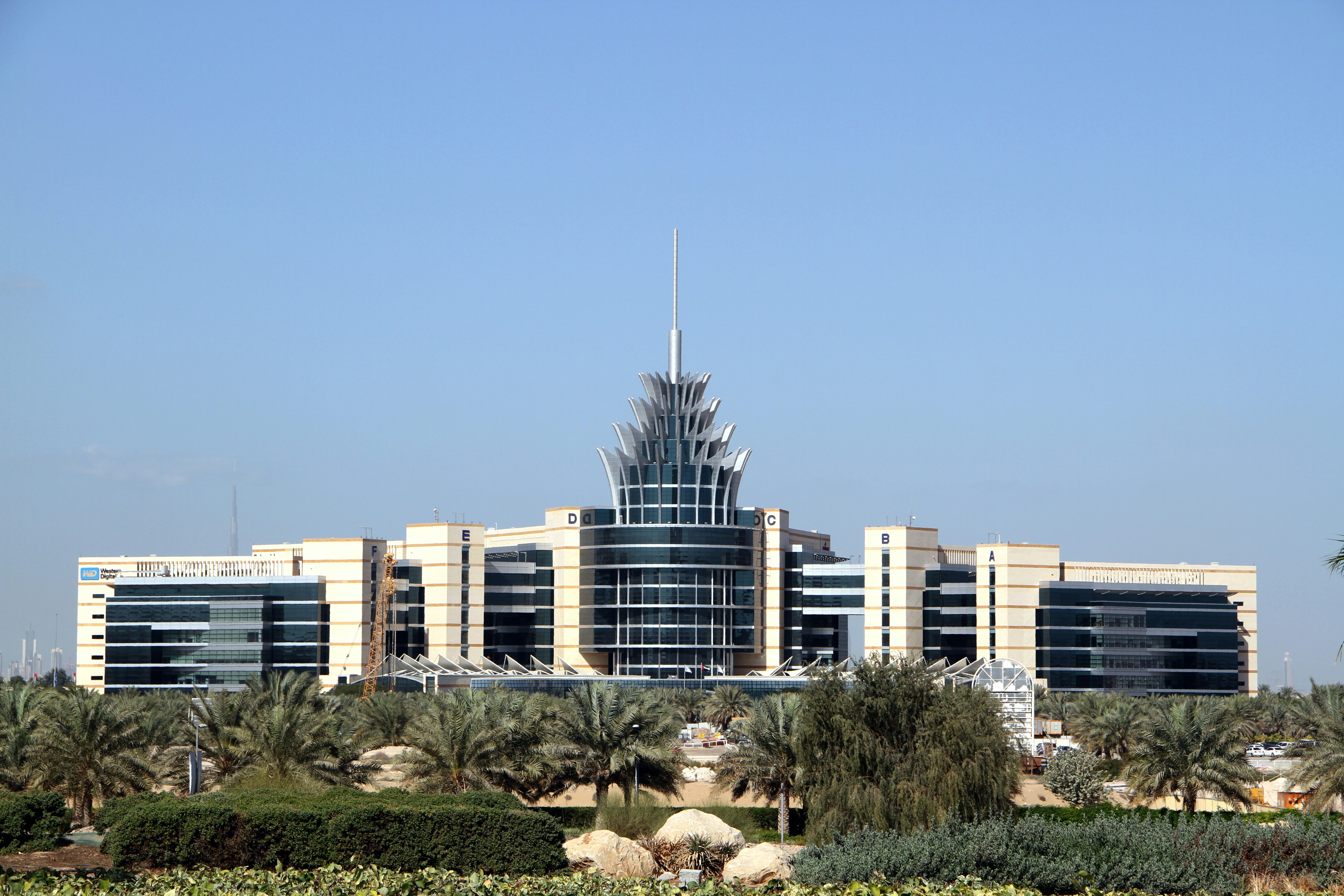
This is where DSO diverges from a typical free zone. The technology park includes:
DTEC (Dubai Technology Entrepreneur Campus). A 28,000 sq ft coworking and incubation space specifically for tech startups. DTEC provides mentorship programmes, funding connections, investor events, and co-working desks. If you're a seed-stage or early-stage tech company, DTEC is one of the few UAE incubators that's embedded within a functioning free zone — meaning your licence and your incubator are in the same place.
University partnerships. Rochester Institute of Technology Dubai and several other educational institutions are located within DSO. For businesses that need to recruit tech talent, run internship programmes, or collaborate on research, having universities on your doorstep is a practical advantage.
Residential community. Over 45,000 people live within DSO. Apartments, townhouses, schools, clinics, supermarkets, restaurants — it's a self-contained neighbourhood. Several founders we've worked with live and work in DSO specifically because it eliminates the Dubai commute.
Smart city infrastructure. Fibre-optic broadband throughout the park, LEED-certified buildings, and sustainable energy initiatives. The physical infrastructure is a tier above most free zones.
Retail and amenities. Over 80 restaurants, cafes, retail outlets, a hospital, gyms, and green spaces. You can operate a business at DSO without leaving the park for days at a time if that's your preference.
What DSO Does Well
Dubai address at mid-tier pricing. DSO gives you a genuine Dubai free zone licence without the AED 50,000+ price tags of DMCC or DIFC. For businesses that need the credibility of a Dubai address but don't need a JLT tower or a DIFC Gate Village office, DSO hits a practical price point.
Tech ecosystem. DTEC, university partnerships, and a resident community of tech companies create an environment where tech businesses can recruit, network, and collaborate more easily than in a generic commercial free zone.
Live-work integration. Being able to live in the same community where your business is based is genuinely rare among UAE free zones. It reduces commute time, simplifies logistics, and lowers the overall cost of operating in Dubai.
Physical space options. From flexi-desks through coworking (DTEC) to dedicated offices to industrial units. DSO can accommodate a solo developer and a 50-person hardware company within the same zone, which means you can scale without moving jurisdictions.
Combined licence activities. Mixing professional and commercial activities under one licence simplifies things for businesses that offer both services and products.
Where DSO Falls Short
Not the cheapest Dubai option. IFZA offers Dubai-adjacent licensing from AED 12,900 with a more streamlined digital-first process. Meydan starts at a similar range. If you don't need the physical tech park infrastructure, you're paying a premium for facilities you won't use.
Location. DSO is on the Dubai–Al Ain Road, which is the eastern edge of Dubai. It's 25 to 35 minutes from Downtown, 20 minutes from the airport, and about 45 minutes from Dubai Marina or JBR. If your clients or meetings are concentrated in central or western Dubai, the commute matters. If you work remotely or your clients are international, it doesn't.
Less brand recognition than DMCC or DIFC. DSO is well-known in tech circles but doesn't carry the same prestige for finance, consulting, or luxury brand businesses. DMCC's JLT address or DIFC's Gate Village carries more weight with certain client types.
Visa quotas tied to office size. Unlike zones where you can stack multiple visas on a flexi-desk, DSO's visa allocation scales with the physical space you lease. A flexi-desk gives you 2 visas. If you need 5 or more, you'll need to upgrade to a larger office, which increases cost. For comparison, SHAMS offers up to 6 visas on a flexi-desk.
Not ideal for pure trading businesses. DSO allows trading licences, but the zone's infrastructure and community are oriented toward technology and services. If your business is primarily import-export, a zone with port access like Ajman Free Zone or JAFZA is a more natural fit.
Who Dubai Silicon Oasis is Best For
- Tech startups and software companies that want DTEC access, university partnerships, and a tech-focused community
- Hardware and IoT companies that need R&D lab space or light manufacturing facilities within Dubai
- Businesses that value live-work integration — founders and small teams who want to live and work in the same community
- Mid-size companies (5–20 people) that need proper office space at a price point below DMCC or DIFC
- E-commerce operators who want a Dubai address and are willing to pay more than a Northern Emirates zone for it
DSO is not the best choice if you're a solo consultant looking for the cheapest possible licence, if your business is primarily offline trading, or if you need to be based in central or western Dubai for client-facing reasons. If you want a Dubai address but at pricing closer to SHAMS, you may want to check out our Meydan free zone guide.
You may want to check out our guide to setting up your business in Ajman Free Zone or our guide to getting a SHAMS trade licence.
You can also visit app.corpwise.ae to get a more personalised recommendation.
DSO vs IFZA vs DMCC: A Quick Comparison
You may also be interested in our guide to free zone company setup.
IFZA: Cheaper entry point (from AED 12,900 licence-only), fully digital process, Dubai-adjacent (Fujairah authority, Dubai presence). Better if you need a licence and visa with minimal overhead and no physical space requirement.
DMCC: Premium Dubai zone based in JLT. Higher cost (AED 35,000+ first year) but stronger brand recognition, commodity trading specialism, and a central Dubai location. Better if brand perception is critical or you're in commodities, crypto, or finance.
DSO: Mid-range pricing with genuine physical infrastructure. The only one of the three that's a true live-work community. Better if you're a tech company, need office or lab space, or value the ecosystem over just the licence.
Not sure if DSO is the right zone for your business? Talk to us — we'll compare it against other options based on your specific activity, team size, and budget, and tell you which one actually makes sense.